Column · @messiahpvcr675
Concrete Contractor Near Me: Questions to Ask Before You Hire
Typing "concrete contractor near me" into a search bar is easy. Choosing the right company is not. Concrete looks simple from the street. It is gray, hard, and everywhere. But anyone who has dealt with a cracked driveway six months after pour day, a patio that holds water after every rain, or a commercial slab that misses spec knows how quickly a bad hire turns into an expensive problem.
Concrete work has very little forgiveness. Once the truck arrives and the mix hits the forms, the crew has a narrow window to place, finish, joint, and cure it correctly. That means the quality of your contractor matters before the first shovel touches the ground. Planning, site prep, drainage, reinforcement, expansion joints, finish selection, and curing discipline all show up in the final result.
If you are comparing bids from a concrete contractor, or narrowing down a concrete contractor Frisco homeowners and property managers keep recommending, the smartest move commercial slab contractor is to ask better questions. Price matters, but the lowest number on paper can hide missing prep, thin sections, weak reinforcement, or a schedule built on wishful thinking. The right questions expose that early.
Start with the scope, not the sales pitch
One of the most common mistakes people make is discussing price before discussing scope. A contractor can only give a useful estimate if everyone is pricing the same job. That sounds obvious, but it falls apart all the time.
Take a residential driveway replacement. One contractor may include demolition and haul-off, compacted base repair, rebar dowels into the existing garage approach, a broom finish, control joints, and cleanup. Another may price only the pour itself and leave the old base, joint layout, and curing compound out of the quote. The second number looks better until the problems start.
Before you talk budget, ask what the job actually includes. Ask how thick the concrete will be, what strength mix they plan to use, whether reinforcement is rebar or wire mesh, how the subgrade will be prepared, and what finish is part of the price. If the contractor cannot explain the difference between a patio, driveway, walkway, retaining footing, or commercial slab in plain language, that is worth noting.
A reliable contractor will usually ask you questions too. How will the area be used? Will vehicles park there? Is there drainage trouble now? Do you want decorative work or a standard broom finish? Is access tight? Are there HOA requirements? Good contractors do not rush past these details because they know those details decide whether the slab performs.
Ask how they handle site prep
If I had to pick the one area homeowners underestimate most, it would be site prep. People focus on the finish because that is what they see. Contractors focus on what sits underneath because that is what prevents settlement, rocking slabs, edge cracking, and drainage issues.
A nice finish on bad prep is still a bad job.
Ask the contractor how they evaluate the base. In North Texas, expansive soils can create movement issues that make preparation even more important. A contractor working regularly as a concrete contractor Frisco TX property owners trust should already understand local soil behavior, drainage concerns, and heat-related curing challenges. That does not mean every slab can be made movement-proof, but it does mean the contractor should talk intelligently about compaction, grading, thickness, reinforcement, and joint placement.
You want to hear specifics. Will they remove soft spots? Add and compact road base where needed? Slope the slab away from the home? Tie into adjacent concrete where appropriate? Protect irrigation lines or nearby structures? Generic answers often mean generic outcomes.
There is also a practical side to this conversation. Site prep affects access, equipment, labor time, and disposal costs. If one bid is much lower than the others, missing prep is often the reason.
The mix design question separates professionals from order-takers
Not every customer needs a technical breakdown of PSI, slump, admixtures, and aggregate, but the contractor should know what they are ordering and why. Ask what mix strength they use for your project and whether that changes based on the application.
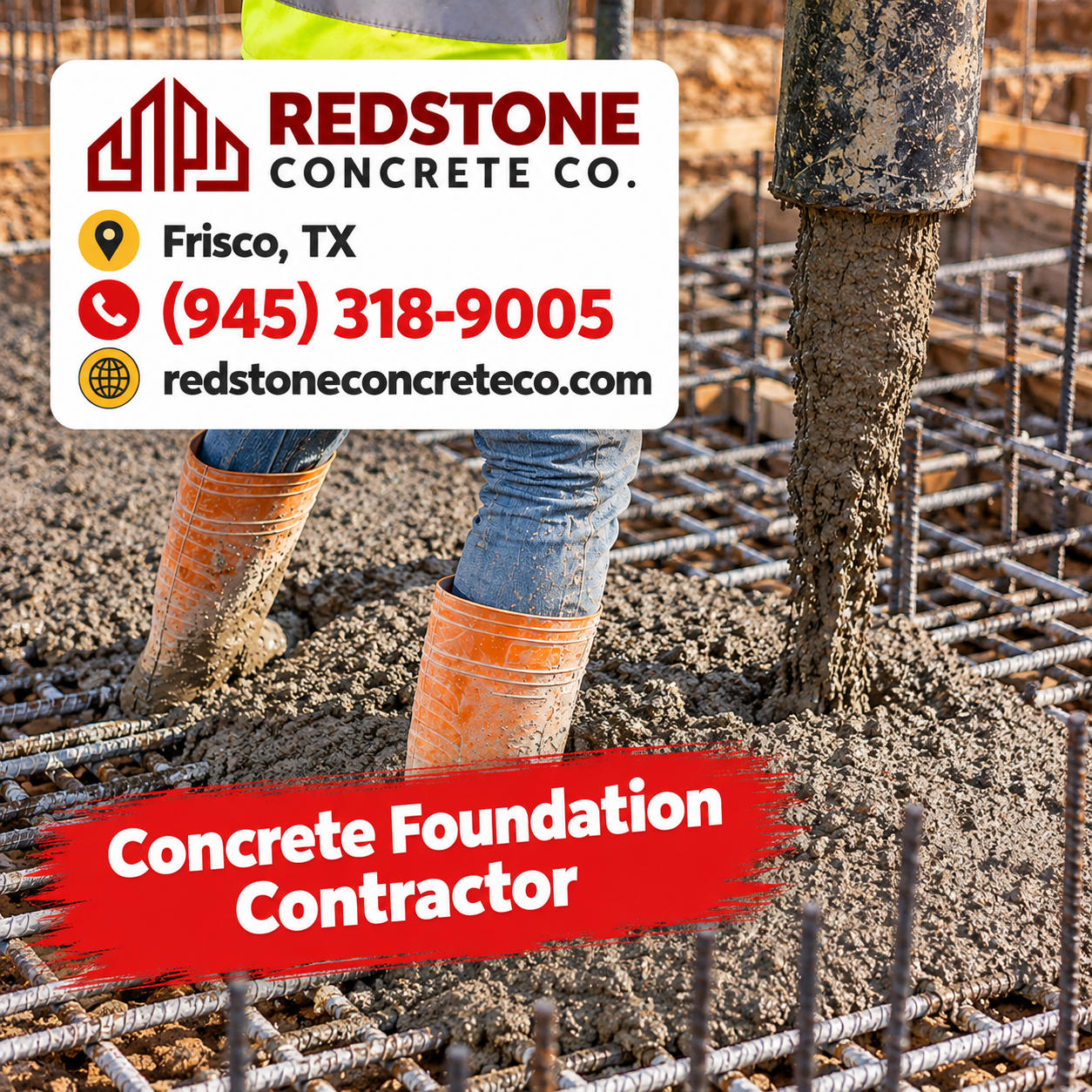
For example, a basic residential walkway may not need the same approach as a driveway carrying full-size trucks, and neither one is the same as a commercial pad. In hot weather, finishing and curing practices become especially important because water evaporates fast. A crew that adds too much water on site to make placement easier can weaken the surface and increase shrinkage cracking.
You do not need a lecture. You do need confidence that the contractor is not simply saying, "We pour concrete all the time, don't worry about it." Concrete rewards precision. It punishes shortcuts.
If you are hiring a commercial concrete contractor Frisco business owners are considering for parking areas, loading zones, foundations, or larger flatwork, the mix and reinforcement conversation becomes even more important. Commercial jobs may involve engineering requirements, inspections, tighter tolerances, and coordination with other trades. That requires a contractor who can read plans, communicate with project managers, and stick to specifications.
Ask what cracking they consider normal, and what cracking means trouble
Every honest concrete contractor should tell you the same thing: all concrete cracks. The goal is not to pretend cracking can be eliminated. The goal is to control where it happens, reduce the severity, and prevent structural or usability problems.
This is where many sales conversations get slippery. Some contractors overpromise and say your slab will not crack. Others hide behind "all concrete cracks" to excuse poor workmanship. The right answer lives in the middle.
Ask where control joints will go and how soon they will be cut or tooled. Ask how they decide spacing. Ask what reinforcement they use, and what it is meant to do. Reinforcement does not prevent every crack, but it helps hold concrete together if cracking occurs. Ask how they handle transitions at garage floors, sidewalks, curbs, or existing slabs. Ask whether they expect hairline shrinkage cracks to be cosmetic or whether they see any risk factors on your site that could lead to larger movement.
A seasoned concrete contractor near me search result should be able to show past work and explain, without dodging, the difference between normal shrinkage, settlement issues, and drainage-related distress.
Find out who is actually doing the work
This question saves people from plenty of frustration. Ask whether the crew is in-house or subcontracted. If subcontracted, ask who supervises the work and who is responsible if something goes wrong. Many projects are sold by one person and performed by another. That is not always a problem, but it becomes one when communication breaks down.
You want to know who will be on site, whether a foreman is present, and how many pours they typically run at once. A contractor juggling multiple jobs can end up rushing finish work or leaving a less experienced crew to handle critical stages. That is risky because concrete work is highly timing-sensitive. You cannot pause a slab halfway through and come back tomorrow.
This is also a good time to ask about cleanup and protection. Will they protect nearby fencing, landscaping, and exterior walls? Who handles saw cutting, washout, and debris removal? Are they careful around garage doors, pavers, utilities, and pool decking? Contractors who run disciplined jobs usually have disciplined answers.
Insurance, permits, and warranties deserve plain answers
Some clients feel awkward asking about paperwork. Do not. A reputable contractor expects it.
Ask whether they carry general liability insurance and, if they have employees, workers' compensation or the appropriate labor coverage for their business structure. Ask whether permits are required for your project and who will pull them. In some jurisdictions and neighborhoods, permit rules or HOA approvals can affect setbacks, drainage, apron changes, and access. If the contractor waves this off without checking, that is not a sign of confidence. It is a sign of carelessness.
Then ask about the warranty, and ask in plain terms. What is covered? For how long? What is excluded? Cosmetic hairline cracking, color variation, and damage caused by soil movement or third parties may not be covered, and that is not unusual. What matters is whether the contractor explains this honestly up front. A vague "we stand behind our work" sounds reassuring but means nothing if there is no written scope and no defined standard for repair.
Questions that quickly reveal the quality of a bid
When you compare proposals, focus on detail. The strongest bids tend to answer the questions customers forget to ask.
Here are five questions worth asking every contractor before you sign:
- What thickness, reinforcement, base prep, and finish are included in this price?
- How will you handle drainage and slope on this specific site?
- Who will supervise the crew on pour day, and how many similar projects have you completed?
- What is your curing process, and how long before the slab can be walked on or driven on?
- What warranty do you provide in writing, and what exclusions should I understand now?
Those questions do two things. First, they help you compare companies fairly. Second, they reveal whether the contractor is patient, specific, and experienced enough to explain the work before the pressure of the job begins.
Cheap bids usually leave clues
A low bid is not automatically a bad bid. Sometimes a contractor has efficient crews, lower overhead, or better scheduling. But the cheap number often hides something. If one proposal comes in dramatically below the rest, slow down and figure out why.
The most common omissions are thinner slabs, less base repair, lighter reinforcement, little or no demolition detail, fewer control joints, limited cleanup, or no mention of curing. Another common issue is underestimating access problems. If the crew has to wheelbarrow concrete through a gate or work around tight backyard constraints, labor rises quickly. A bidder who ignores that is either inexperienced or betting on change orders.
I have also seen low bids tied to unrealistic schedules. The contractor promises to start "next week" during a period when every good flatwork crew in town is already booked. Then the job gets delayed, rushed, or handed to whoever happens to be free. It is far better to hire a company that gives a realistic timeline and meets it than one that overpromises and improvises.
If you are looking for the best concrete contractor Frisco has to offer, pay attention to how the company explains value. Good contractors do not need to be the cheapest to win work. They need to show where the money goes and why it matters.
Look at finished jobs, not just fresh pours
Fresh concrete photographs beautifully. The real test comes later.
Ask to see projects that are at least several months old, preferably older. A new slab tells you whether the crew can finish concrete. An older slab tells you whether they can build one that lasts. Look for standing water after rain, random cracking patterns, spalling, separation at edges, and rough transitions where new concrete meets existing surfaces.
Decorative concrete deserves even closer inspection. Stamped and stained work can look striking on day one and disappointing later if the installer cuts corners on sealing, color consistency, or surface prep. Homeowners often focus on pattern and color, while experienced contractors focus on edges, joint planning, drainage, and long-term wear.
If you are hiring for commercial work, ask to see projects similar in scale and function. A company that does excellent backyard patios may not be the right commercial concrete contractor Frisco developers need for larger slabs, site concrete, curbs, or higher-spec applications. Residential and commercial concrete overlap, but they are not interchangeable.
Communication matters more than most people expect
Concrete jobs move quickly, but the lead-up should not feel chaotic. The way a contractor communicates before the contract usually reflects how they will handle the work.
Notice whether they return calls, answer questions directly, and send clear written estimates. Notice whether they explain delays due to weather without sounding evasive. Concrete scheduling often changes because rain, extreme heat, and batch plant timing affect pour quality. That is normal. Poor communication is not.
A strong contractor tells you what to expect on demolition day, form day, pour day, and curing day. They explain when you can walk on the slab, move patio furniture back, or drive on a new driveway. They tell you what kind of cracking or color variation can happen during cure and what should prompt a call. That level of clarity reduces conflict because everyone knows the standard.
A few red flags should stop the conversation
Most hiring mistakes are visible early if you know what to watch for. Not every red flag means guaranteed failure, but several together usually point in the same direction.
- The contractor refuses to provide a written scope or avoids details about thickness, prep, and reinforcement.
- The price is far below competing bids, with no clear explanation for the difference.
- They ask for a large cash payment up front or pressure you to commit immediately.
- They promise concrete will not crack at all, or they dismiss drainage and soil movement concerns.
- They have no recent project photos, no local references, and no verifiable business presence.
A trustworthy company does not need hard-sell tactics. They let the work, process, and documentation make the case.
Local experience is not a cliché, it is practical
People sometimes hear "local experience" and treat it like marketing fluff. In concrete, it is practical. Climate, soils, municipal expectations, supplier relationships, and inspection habits all shape how a job gets done.
In Frisco and the surrounding North Texas area, heat, rapid moisture loss, and expansive soil conditions can all influence decisions. A concrete contractor Frisco homeowners recommend repeatedly has probably learned where drainage surprises tend to show up, which neighborhoods have tighter access, how to coordinate around local permit expectations, and what finish choices hold up best in the area. That kind of familiarity does not replace craftsmanship, but it often improves execution.
This is one reason many property owners prefer hiring a company with a clear local track record rather than the first name that appears in a generic "concrete contractor near me" search. Search results can help you build a list, but they do not tell you how a company performs when the base is unstable, the weather turns, or the customer wants changes after forms are set.
When a company name keeps coming up
Sometimes one company gets mentioned repeatedly by neighbors, builders, or local business owners. That does not automatically make them the right fit, but repeated local referrals are worth paying attention to. If people in the Frisco area keep bringing up a name like Redstone Concrete Co, ask why. Was it the finish quality, communication, schedule discipline, cleanup, or how they handled an issue after the pour?
The best referrals are specific. "They did a great job" is pleasant but not very useful. "They explained why our old driveway failed, rebuilt the base correctly, and the drainage finally works" tells you much more. The same goes for commercial references. If a property manager says a crew coordinated well with other trades and hit inspection requirements without drama, that says a lot about professionalism.
If you are researching the best concrete contractor Frisco Texas Redstone Concrete Co or any other local company, try to move beyond branding and into process. Ask for written scope details, old project photos, references, and a clear explanation of how they would approach your exact site.
The hire that holds up over time
The best concrete contractor is not always the one with the flashiest website, the fastest quote, or the lowest number. It is the one that treats prep seriously, speaks clearly about trade-offs, documents the scope, and has the judgment to adjust when site conditions are not ideal.
Concrete is permanent enough that shortcuts linger. So do good decisions.
A contractor who asks smart questions, explains the work in practical terms, and gives you realistic expectations is usually telling you something important about how they build. Whether you are replacing a driveway, adding a backyard patio, or vetting a commercial concrete contractor Frisco property owners can rely on, the right questions will do more for you than any advertisement ever will.
The search may begin with "concrete contractor near me," but the real decision comes down to this: who understands the work deeply enough to do it right the first time, and who is willing to prove it before you sign.