Column · @messiahpvcr675
Concrete Contractor Frisco for Sidewalks, Slabs, and Foundations
Frisco keeps building, and the pace of growth changes what property owners need from concrete work. Ten years ago, many homeowners were focused on a simple patio extension or driveway patch. Today, the conversations are broader and more demanding. Commercial developments need durable flatwork that can handle steady traffic. Homeowners want sidewalks that look clean, drain properly, and stay level. Builders and investors need slabs and foundations placed with tight tolerances because downstream trades depend on it.
That is where choosing the right concrete contractor matters. Concrete is one of those trades that looks straightforward from the curb. Forms go in, trucks arrive, workers place the mix, and then everyone leaves. What people do not always see is how much of the final result was decided before the first truck backed up. Soil prep, subgrade moisture, reinforcement layout, joint placement, slope, access, weather timing, and curing practices all shape whether the finished work performs for years or starts showing trouble early.
If you are looking for a concrete contractor Frisco property owners can trust for sidewalks, slabs, and foundations, it helps to know what separates basic installation from professional work. It also helps to understand why Frisco’s conditions make some details non-negotiable.
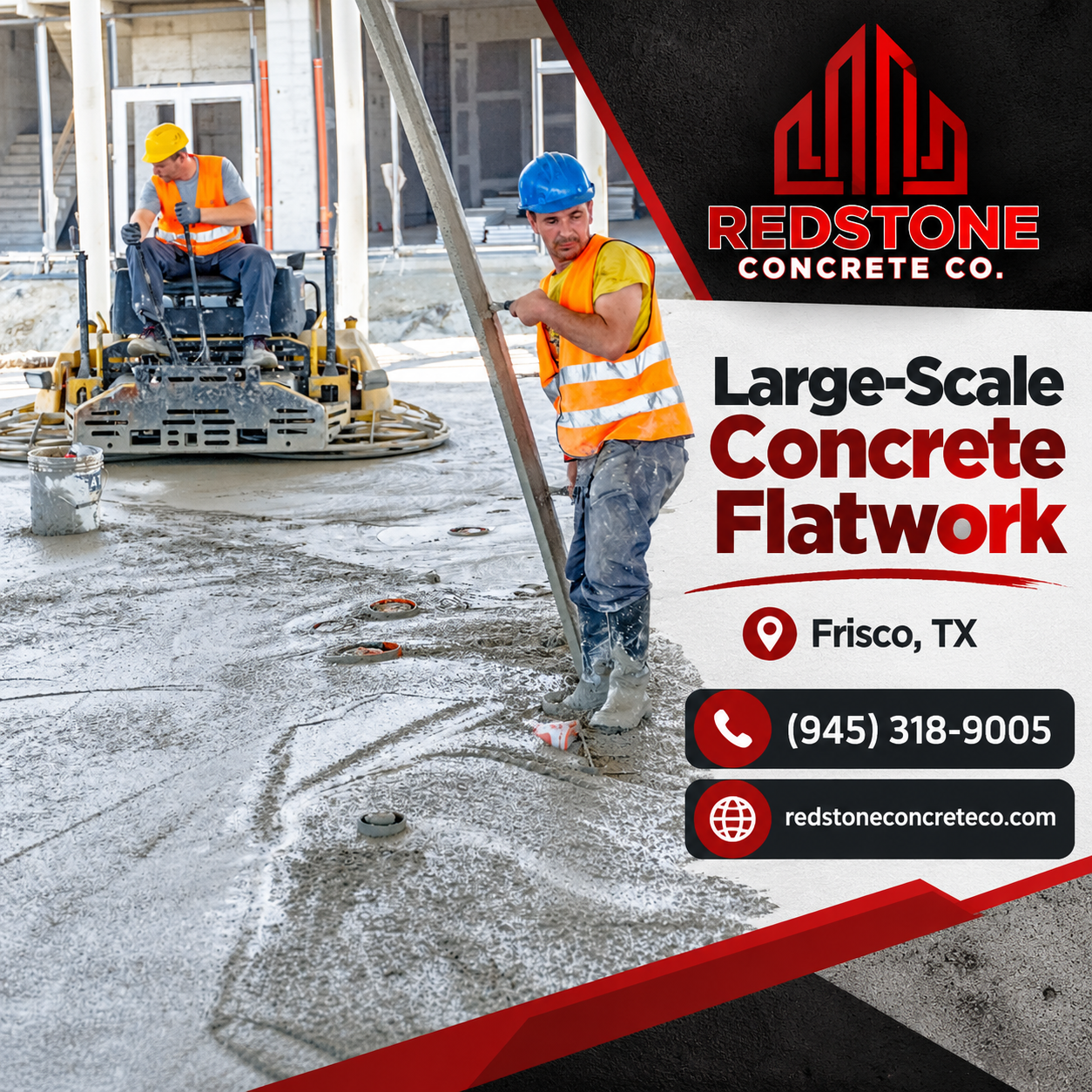
Why concrete work in Frisco needs local judgment
North Texas soil has a reputation for movement, and it earns it. Expansive clay can swell when it gets wet and shrink when it dries out. That movement puts stress on sidewalks, slabs, and foundations. Add heat, sudden storms, irrigation patterns, and long dry spells, and you get conditions that can punish careless prep.
A concrete contractor Frisco TX clients hire should not treat the site like a blank slate. The ground has a history. If a yard stays soft after rain, if drainage pushes water toward the house, if an old section cracked in a repeating pattern, those clues matter. Experienced crews read those signs early. They do not promise that concrete will never crack, because that is not realistic. Concrete cracks. The real issue is where it cracks, how it moves, and whether the installation was built to manage normal stress instead of amplifying it.
Frisco also presents a practical challenge that people outside the trade sometimes underestimate. Many residential and commercial sites have limited access. Gates are narrow, fences are finished, landscaping is established, and neighboring structures leave little room for equipment. On paper, a sidewalk replacement or slab extension looks simple. On site, the crew may need to stage materials carefully, protect adjacent surfaces, and pour in conditions that leave little margin for error. A seasoned concrete contractor near me search should lead you to companies that can talk through access, logistics, and protection plans without guessing.
Sidewalks that do more than connect one point to another
A sidewalk should feel invisible when it works well. People walk it without thinking. Water moves off the surface instead of pooling. Edges stay stable. Transitions are smooth, and changes in elevation are intentional rather than accidental. When a sidewalk is done poorly, every flaw announces itself. Low spots hold water. Corners chip. Sections settle. Expansion joints look random or are missing where they should have been.
In Frisco, sidewalks serve more than a functional role. They often shape first impressions of a home, office, retail strip, or multifamily property. A cracked and uneven walk at the front of a building tells visitors something before they ever reach the door. On the residential side, a well-finished walkway frames the landscape and makes the property feel maintained and safe.
The technical side matters just as much as appearance. Proper excavation and compaction under a sidewalk are critical, especially where water tends to travel along the side yard or around downspouts. Slope matters. If the path pitches the wrong way, it may send runoff back toward a structure, which creates larger drainage issues than the sidewalk itself. Joint spacing matters too. A contractor who understands flatwork will place control joints with a purpose, helping guide shrinkage cracks to predictable locations.
One common mistake is assuming that a thicker pour automatically solves performance issues. Thickness can help in the right application, but it does not substitute for preparation. I have seen sections poured heavy over weak or wet subgrade that still failed early. I have also seen well-prepared sidewalks with sensible reinforcement and proper curing hold up far better than thicker work installed carelessly.
For commercial properties, sidewalks carry a different set of demands. They may need to accommodate higher foot traffic, ADA considerations, transitions at curbs, and tighter finish expectations around storefronts or office entries. A commercial concrete contractor Frisco businesses hire should be able to coordinate around occupied spaces, maintain safe access, and sequence work to reduce disruption.
Slabs are where versatility meets risk
The word slab covers a wide range of projects. It may mean a residential patio, a detached garage floor, a shed pad, a dumpster enclosure base, an equipment pad, or a larger commercial section designed for repeated loads. Each use changes the design decisions.
A backyard slab for entertaining has one set of priorities. Finish quality, drainage away from the home, clean integration with existing surfaces, and crack control tend to lead the conversation. A slab supporting vehicles or heavy equipment raises different questions about base prep, reinforcement, edge strength, and expected load. This is where the best concrete contractor Frisco clients recommend often stands apart. They ask what the slab will actually do, not just how large it needs to be.
That distinction sounds small, but it prevents expensive mistakes. If a homeowner says they want a slab for a future workshop, the follow-up should not stop at dimensions. Will a vehicle be parked inside? Will lifts or heavy tools sit on it? Will walls be framed later? Is power being trenched nearby? Those answers affect thickness, reinforcement strategy, joint layout, and subgrade treatment.
On commercial jobs, slab placement becomes even more demanding. Tolerances may need to align with metal buildings, storefront systems, bollards, drains, or utility penetrations. Schedule pressure is often real, but rushing placement rarely pays off. A slab that is out of level, improperly cured, or poorly jointed can create a chain of problems for the next trade. Flooring installers, framers, and finish crews all inherit those problems.
One of the clearest signs of an experienced concrete contractor is how they talk about curing. Many property owners focus on the day of the pour because it is visible and dramatic. The truth is that the hours and days after placement are just as important. Rapid moisture loss, heat, wind, and poor protection can weaken the surface and contribute to shrinkage issues. Contractors with strong field discipline plan for finishing and curing as part of the job, not as an afterthought.
Foundations demand a higher level of precision
Sidewalks and slabs are important, but foundations operate at a different level of consequence. If a walkway settles, it can often be repaired or replaced with manageable disruption. If a foundation has problems, everything built on top of it feels the effect. Doors can stick, cracks can appear in finishes, floors can slope, and repair costs rise fast.
That is why foundation work should never be approached as commodity labor. A concrete contractor Frisco homeowners and builders trust for foundations needs technical discipline, clear communication, and respect for engineering requirements. Reinforcement placement, beam dimensions, moisture conditioning, elevation control, and inspection readiness are not minor details. They are the work.
Frisco’s soil conditions make this especially important. Foundations in expansive clay areas need systems and procedures suited to movement risk. Even with sound design, execution matters. Steel placed too low or too high in the pour is not doing its intended job. A rushed crew that fails to maintain grade can create uneven support conditions. Poor site drainage around a newly poured foundation can set up future trouble before framing even starts.
There is also a practical side that good contractors communicate early. Foundation work rarely exists in isolation. Plumbing rough-ins, utility sleeves, inspections, and site access all have to line up. When schedules slip, some crews are tempted to compress steps that should not be compressed. The best concrete contractor Frisco Texas Redstone Concrete Co or any other serious local firm would tell a client the same thing: it is better to protect sequence and quality than to pour under the wrong conditions and inherit bigger costs later.
What separates a reliable contractor from a low bid
Most people start with price because it feels objective. The problem is that concrete pricing is easy to flatten and hard to compare. Two estimates may look similar on the surface while hiding major differences in preparation, materials, reinforcement, cleanup, and finish expectations.
A low bid often leaves out the work that keeps concrete stable. It may assume minimal excavation, minimal base preparation, or reinforcement that is technically present but poorly specified. It may not address haul-off, site protection, saw cutting, or curing. By the time those gaps show up in the field, the client is already committed.
When people search for a concrete contractor near me, they often want a fast answer. That is understandable. Still, a good hiring decision usually comes from a slower conversation. Ask how the base will be prepared. Ask how drainage will be handled. Ask where joints will go and why. Ask what finish is appropriate for the use. Ask who supervises the crew and how issues are handled if site conditions differ from expectations.
A capable contractor should be able to explain the reasoning without hiding behind jargon. Clear explanations are a good sign. So is honesty about what cannot be guaranteed. Be wary of absolute promises, especially around cracking. Professional concrete work aims to minimize random cracking and manage movement, not pretend it can suspend the laws of materials and weather.
Sidewalks, slabs, and foundations each have their own failure patterns
Knowing how concrete typically fails helps property owners ask better questions. Sidewalks tend to show trouble through settlement, trip hazards, edge breakdown, and poor drainage. Slabs often reveal issues through surface dusting, random cracks, ponding, or corners that lift or break. Foundations show problems through symptoms in the structure above, including interior cracks, uneven floors, and recurring movement.
Those patterns usually trace back to a small number of causes. Weak subgrade, poor drainage, rushed finishing, inadequate curing, misplaced reinforcement, and bad joint planning account for a large share of preventable issues. Not every crack means bad workmanship. What matters is the size, location, pattern, and movement over time.
An experienced concrete contractor Frisco TX owners call for evaluations will often spend more time looking around the site than staring only Browse around this site at the damaged concrete. They want to know where water travels, whether irrigation hits the area heavily, whether downspouts discharge nearby, and how surrounding grades interact with the slab or walkway. That broader view is what leads to useful recommendations instead of surface-level patching.
Where commercial jobs get complicated
Commercial concrete work in Frisco adds layers that many residential-only crews are not set up to handle. Access windows may be limited. Tenants may still be operating. Safety barriers, pedestrian routing, and scheduling around deliveries become part of the project. Finish consistency often matters more because concrete sits in full public view. Tolerances can be tighter because the flatwork interfaces with storefronts, metal framing, ramps, drains, and curbs.
A commercial concrete contractor Frisco property managers trust must manage both craftsmanship and coordination. It is not enough to place concrete well. The crew must also keep the site functional, communicate clearly, and protect surrounding assets. That includes everything from avoiding damage to landscaping and utilities to planning pours that do not trap customers or block critical access points.
Retail centers are a good example. Replacing a sidewalk section sounds simple until you factor in foot traffic, storefront visibility, drainage at door thresholds, and cure time before reopening the path. In those jobs, sequencing is part of quality. The concrete may be strong, but if the project creates safety issues or business disruption that could have been avoided, it was not managed well.
A practical way to evaluate a contractor
If you are comparing companies, keep the evaluation grounded. Fancy language is easy. Field discipline is harder to fake.
- Ask how they handle subgrade preparation and compaction.
- Ask what reinforcement is included and how it will be supported during placement.
- Ask how they plan joint spacing and slope.
- Ask who will supervise the work on site.
- Ask what protection and cleanup are included in the price.
Those five questions reveal a lot. Contractors who answer them directly usually know their process. Contractors who stay vague often rely on price alone to win the job.
You should also pay attention to how they talk about your specific site. A good contractor notices practical details. They ask about drainage, access, existing elevations, neighboring surfaces, and how you plan to use the finished concrete. If the conversation stays generic, the proposal probably will too.
Why local reputation still matters
Online searches are useful, but concrete remains a trade where reputation travels by direct experience. People remember who showed up on time, who protected the property, who corrected issues promptly, and whose work still looks good after seasons of weather. In a fast-growing city like Frisco, that local track record matters because many projects involve repeat business, referrals, and visible work in neighborhoods or commercial corridors.
That is one reason names like Redstone Concrete Co come up in conversations about reliable service. When people commercial concrete services refer to the best concrete contractor Frisco has to offer, they are usually not talking only about the finished surface. They mean the full experience, from the first site walk to the final cleanup. They mean a company that understands local soils, communicates clearly, and does not cut corners when no one is looking.
For clients specifically searching the phrase best concrete contractor Frisco Texas Redstone Concrete Co, the expectation is not marketing polish. It is proof of process, consistency, and results. The same standard should apply to any contractor you consider. Ask to see relevant work. Ask how similar jobs were handled. Look for signs of organization, not just signs of ambition.
The value of getting the scope right the first time
Many concrete problems start before the bid, when the scope is too loose. A homeowner says they want a patio, but the drainage plan is never discussed. A builder requests a slab, but future load requirements remain vague. A property manager wants sidewalk replacement, but access and pedestrian routing are not addressed until demolition starts.
Concrete rewards specificity. Dimensions matter, but so do use case, subgrade condition, edge detail, reinforcement, slope, finish, cure, and integration with adjacent surfaces. Clear scope protects both the client and the contractor. It reduces change orders, limits assumptions, and makes pricing more honest.
This is especially true for foundations. If the site is not truly ready, pouring because the calendar says it is time can create larger setbacks later. The same is true for slabs that will receive structures, coatings, or heavy use. A little patience before placement often saves a great deal of frustration afterward.
The work should look good, but performance comes first
A smooth finish and crisp edges catch the eye, and they should. Appearance matters. But concrete that looks sharp on day one and performs poorly a year later was not a success. The best work balances both. It holds grade, drains well, resists avoidable surface problems, and still presents clean lines and a professional finish.
That balance is what clients should expect from a concrete contractor Frisco professionals recommend for sidewalks, slabs, and foundations. Whether the project is residential or commercial, the principles stay the same. Prepare the site properly. Match the installation to the use. Respect local soil and weather conditions. Place and finish with control. Cure with intention. Communicate clearly.
When those basics are handled well, concrete does what it is supposed to do. It supports daily life without drama. People walk across it, build on it, park on it, and rarely think about it again. In this trade, that is often the best outcome possible.